
Description
What Is a Sales Procedure?
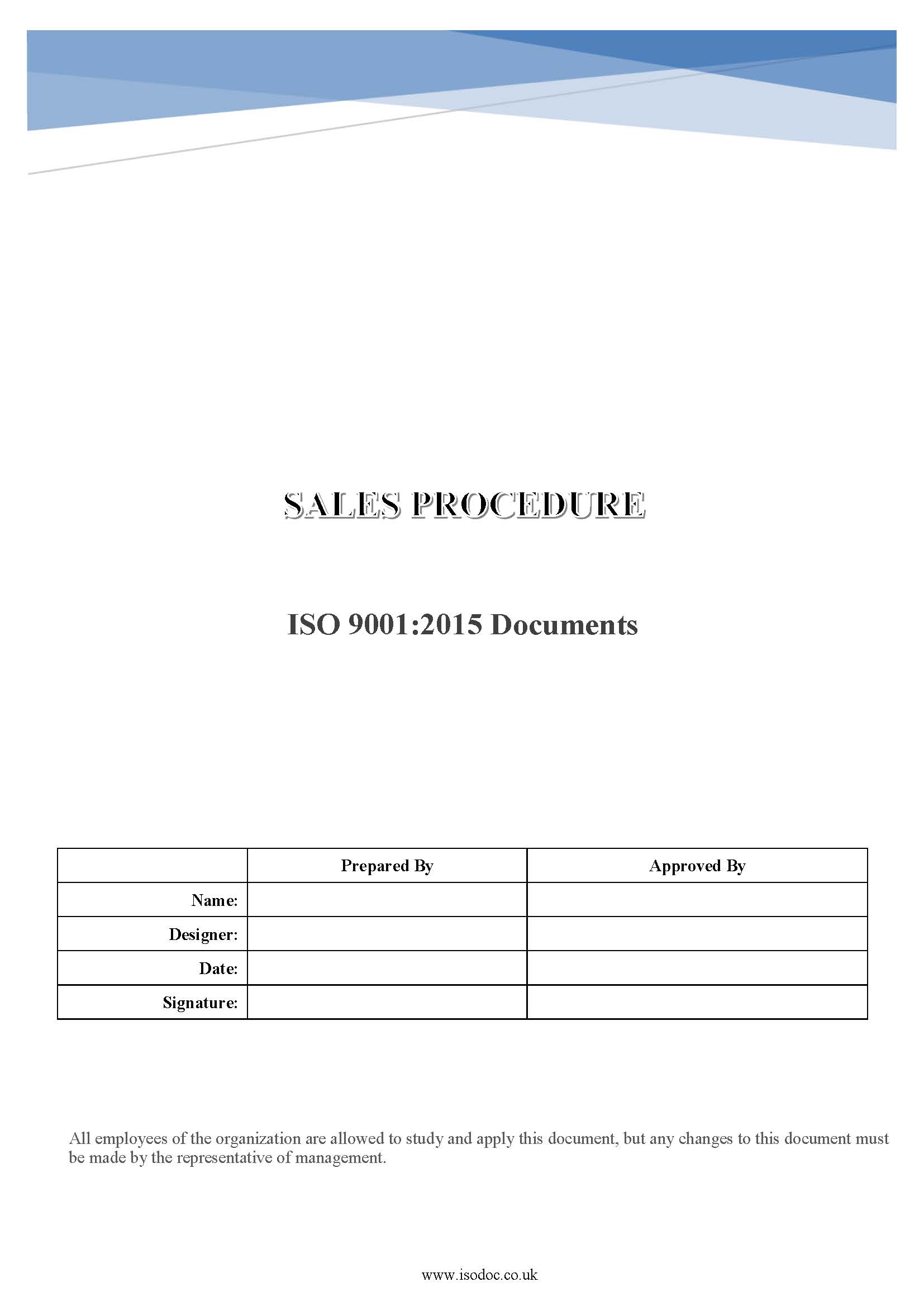
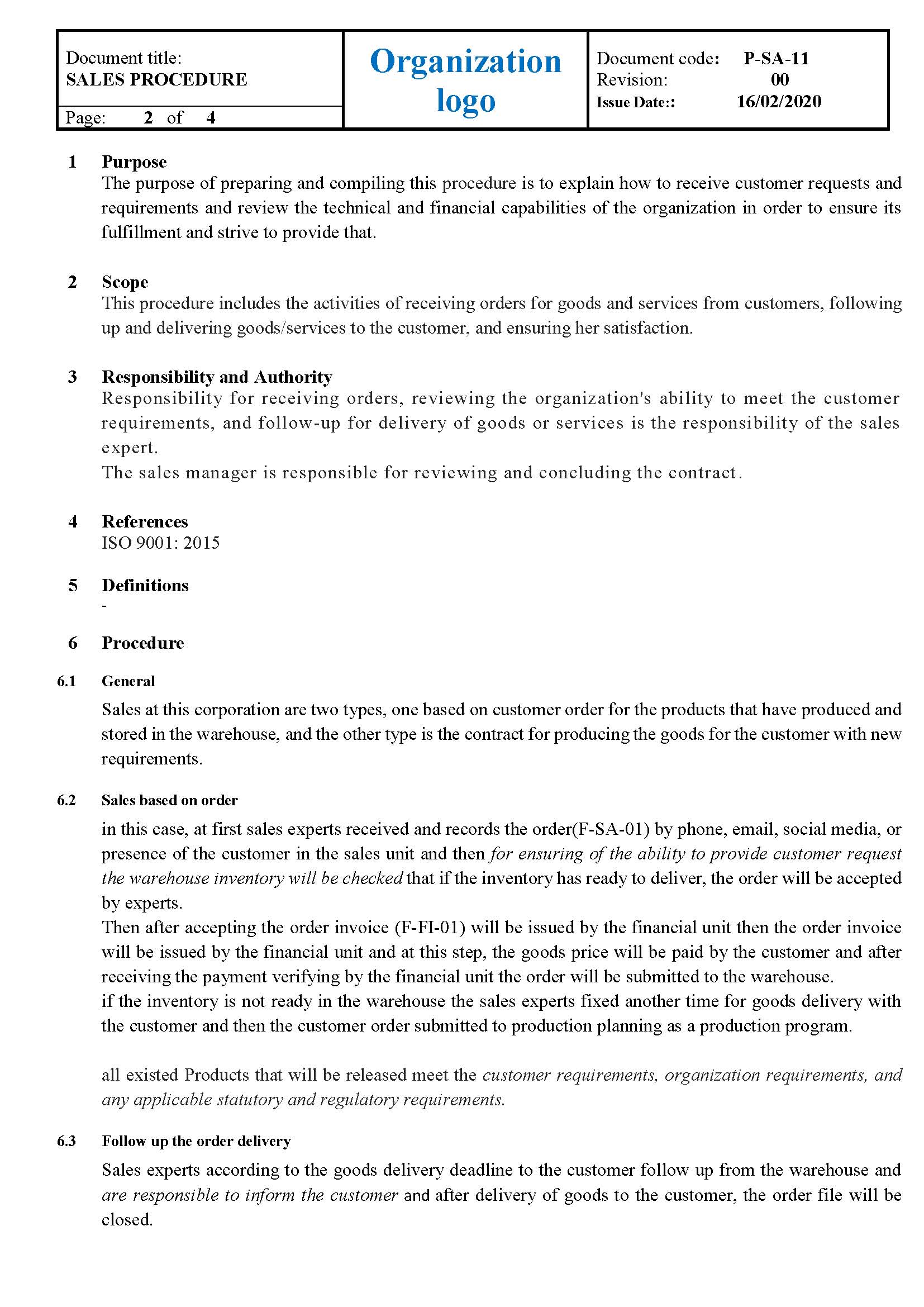
A Sales Procedure is a documented process that defines how an organization manages all customer-facing sales activities, from inquiries to order fulfillment and post-sale support.
It ensures that sales operations are consistent, repeatable, and aligned with organizational objectives, ISO 9001:2015 requirements, and customer expectations.
The procedure outlines roles, responsibilities, workflows, approvals, and documentation to guarantee efficiency, transparency, and compliance.
Key Components of a Sales Procedure
-
Customer inquiry and lead management
-
Quotation preparation and review
-
Order confirmation and sales review
-
Contract review and approval
-
Payment processing and invoicing
-
Delivery coordination and logistics
-
Post-sale support and complaint handling
Benefits of Implementing a Sales Procedure
-
Consistent and accurate sales operations
-
Faster order processing and reduced errors
-
Clear responsibilities and accountability
-
Compliance with ISO 9001:2015 Clauses 8.2 and 8.5
-
Improved customer satisfaction and trust
-
Data-driven sales performance analysis
-

sale procedure
Why Organizations Need a Sales Procedure
A structured Sales Procedure ensures that organizations achieve operational excellence, maintain customer satisfaction, and improve sales efficiency.
Ensuring Consistency in Sales Operations
By standardizing sales processes, organizations reduce errors, prevent missed orders, and ensure every customer interaction follows defined workflows.
Improving Customer Satisfaction
Documenting the sales workflow ensures accurate quotations, timely deliveries, and effective follow-up, enhancing the overall customer experience.
Supporting ISO 9001 Compliance
A Sales Procedure aligns with ISO 9001:2015 Clause 8.2 “Requirements for Products and Services” by managing customer communication, sales reviews, and order requirements.
Scope of the Sales Procedure
This procedure applies to:
-
All sales personnel and account managers
-
Customer inquiries and quotation handling
-
Sales review and contract approvals
-
Coordination with production, inventory, and finance
-
Post-sale support and complaints
Method for Implementing the Sales Procedure
Customer Inquiry and Lead Management
-
Capture leads from marketing campaigns, referrals, and inbound inquiries
-
Validate customer requirements and categorize by priority
Quotation Preparation and Review
-
Prepare quotations according to pricing and policy guidelines
-
Ensure technical, delivery, and contractual requirements are included
-
Conduct internal review for approval if required
Sales Review Procedure
-
Conduct a Sales Review to confirm that customer requirements can be met
-
Ensure alignment with production capacity and delivery schedules
-
Document approval in the Sales Procedure records
Order Confirmation and Contract Approval
-
Validate purchase orders and confirm acceptance
-
Review contractual terms for compliance and feasibility
-
Obtain necessary management approvals
Payment and Invoicing
-
Confirm customer credit terms and payment schedules
-
Generate invoices following confirmed orders
-
Record payments and reconcile with accounts
Delivery and Logistics Coordination
-
Coordinate with warehouse, production, and logistics teams
-
Track shipments and ensure timely delivery
-
Update customers on order status
Post-Sale Customer Support
-
Record and resolve complaints or returns
-
Provide technical support or guidance as required
-
Use feedback for continuous improvement of sales processes
ISO 9001:2015 Clauses Related to Sales Procedure
Clause 8.2 – Requirements for Products and Services
-
Manage customer communication, inquiries, and feedback
-
Conduct Sales Reviews to confirm order feasibility
-
Document requirements and approvals within the Sales Procedure
Clause 8.5 – Production and Service Provision
-
Implement controlled conditions for order fulfillment
-
Align order execution with production schedules and quality standards
Clause 7.1 – Resources
-
Ensure adequate staffing, tools, and systems for effective sales operations
Clause 6.1 – Actions to Address Risks and Opportunities
-
Identify and mitigate risks in order processing, delivery, and customer satisfaction
Relationship Between Sales Procedure and Other Processes
Coordination with Production and Inventory
-
Ensures ordered products are available and production schedules match delivery commitments
Collaboration with Finance
-
Confirms credit limits, payment terms, and invoicing accuracy
Integration with Quality Management
-
Aligns sales processes with inspection, testing, and quality requirements
Alignment with Marketing
-
Supports campaigns, promotions, and lead generation
Related Documents and Records
Sales Documentation
-
Customer inquiries and lead sheets
-
Quotations and proposals
-
Sales orders and purchase confirmations
-
Contract review and approval forms
Operational Records
-
Delivery notes and shipment records
-
Invoices and payment confirmations
-
Customer complaints and corrective actions
-
Sales performance reports and KPIs
Benefits of a Well-Implemented Sales Procedure
-
Faster, more accurate order processing
-
Improved customer satisfaction and loyalty
-
Reduced disputes, errors, and delays
-
Clear documentation and compliance with ISO 9001:2015
-
Continuous improvement of sales operations
Conclusion
A Sales Procedure is a critical element of a quality management system. By standardizing sales operations, integrating with production and finance, and documenting approvals and reviews, organizations can improve customer satisfaction, operational efficiency, and ISO compliance, while enabling continuous improvement and data-driven decision-making.
Reviews
There are no reviews yet.